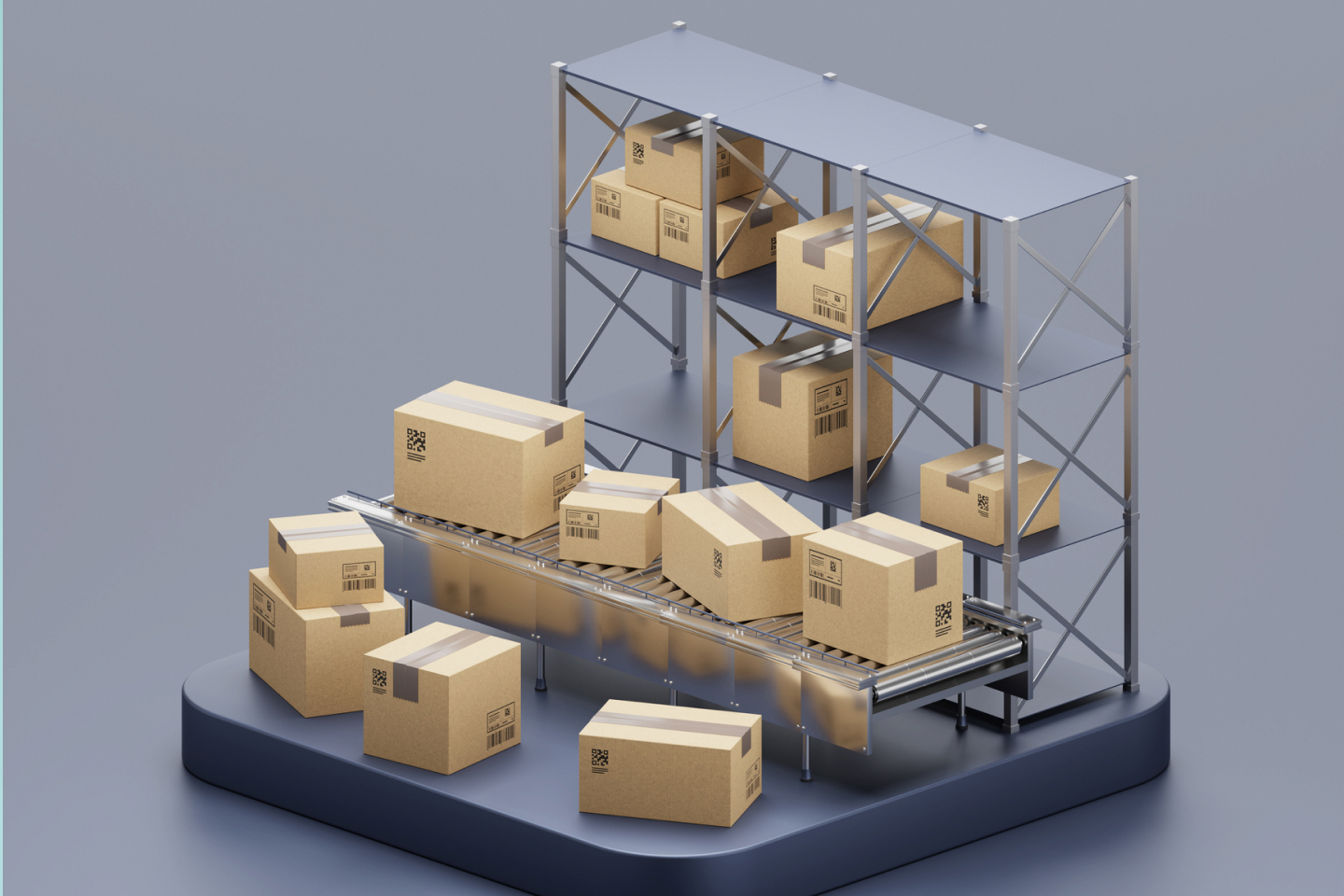



Reducing the carbon footprint of e-commerce starts with tackling one of the industry’s biggest inefficiencies: transporting empty space. According to the French Agency for Ecological Transition (ADEME), around 50% of e-commerce parcels contain empty space. While sustainability initiatives continue to grow, the reality on the road is still characterised by underutilised vehicles and unnecessary journeys. The challenge is clear: how can businesses optimise transport loads while improving warehouse efficiency? The answer lies in better data management and unified order orchestration.
The cost of empty transport and fragmented logistics
One of the biggest obstacles to efficient logistics is the fragmentation of inventory across multiple warehouses. When products for a single order are stored in different locations, businesses often have no choice but to split shipments. This increases packaging, transport movements and ultimately carbon emissions.
A more sustainable approach starts by consolidating inventory and logistics operations into a unified ecosystem. By pooling stock and coordinating fulfilment, businesses can maximise vehicle utilisation and reduce emissions per shipment. In practice, this means:
- Consolidating products to minimise packaging waste and unnecessary transport movements.
- Centralising shipment planning to optimise delivery routes based on carrier operations.
- Moving from reactive shipping decisions to a data-driven logistics strategy that balances operational efficiency with environmental performance.
Using data to bring inventory closer to customers
Achieving this level of efficiency requires accurate demand analysis and intelligent inventory positioning. By placing products closer to end customers, businesses significantly reduce the distance travelled during the last mile, the most carbon-intensive stage of the delivery journey.
This approach delivers multiple benefits:
- Complete inventory visibility, reducing routing errors and unnecessary product returns.
- Real-time data that enables more accurate inventory movements.
- Smarter logistics flows that prioritise the shortest and most efficient transport routes while eliminating unnecessary transfers.
As a result, warehouses evolve into agile distribution hubs capable of serving local markets with a significantly lower environmental impact.
Breaking down fragmented systems to eliminate operational inefficiencies
Disconnected software platforms create costly inefficiencies—not only for businesses but also for the environment. When sales and logistics data are not synchronised, shipping decisions rely on outdated information. This often results in inventory discrepancies, emergency replenishments and unnecessary transport movements.
A unified logistics infrastructure bridges the gap between digital commerce and physical operations, ensuring that supply continuously matches demand. By connecting every system, businesses can also smooth seasonal peaks and better anticipate transport needs. Eliminating friction between e-commerce platforms and fulfilment centres reduces the need for express deliveries, which are among the most carbon-intensive shipping options.
How Weavenn enables more sustainable logistics
Weavenn provides the technology platform needed to support more sustainable logistics operations. Through predictive logistics and real-time orchestration, the platform eliminates operational blind spots, from underutilised shipments to unnecessary transport routes.
With Weavenn:
- Product catalogues and inventory are centralised within a single platform.
- The system automatically identifies opportunities to consolidate shipments.
- Orders are routed to the warehouse closest to the end customer, reducing last-mile transport distances.
This level of visibility gives e-commerce businesses the ability to transform operational efficiency into measurable environmental performance. Technology investment becomes a practical way to reduce unnecessary warehouse movements and lower CO₂ emissions.
Conclusion
Reducing the environmental impact of e-commerce begins with smarter logistics. Centralising inventory, synchronising data across marketplaces and online stores, and orchestrating fulfilment from a single platform all contribute to fewer unnecessary shipments and better transport utilisation.
Greater visibility enables businesses to identify optimisation opportunities, streamline inbound and outbound operations, and maintain efficient logistics flows. In the long term, logistics flow optimization becomes not only a driver of operational performance but also a powerful lever for more sustainable e-commerce.